Valencià
 Español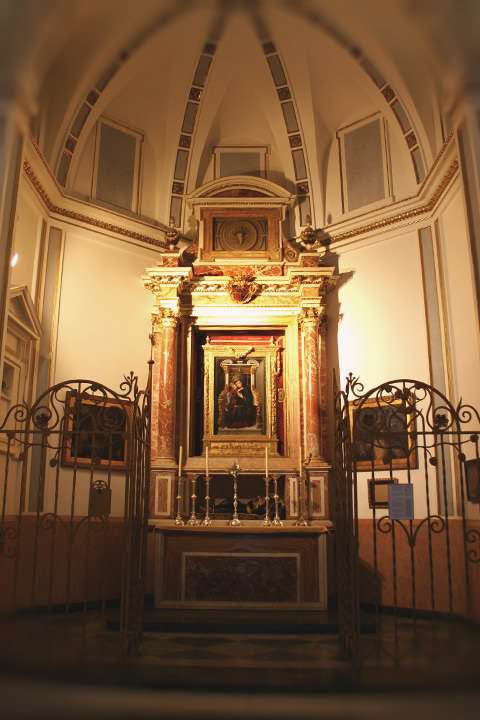
Key information
Chapel of the Virgin of Puig
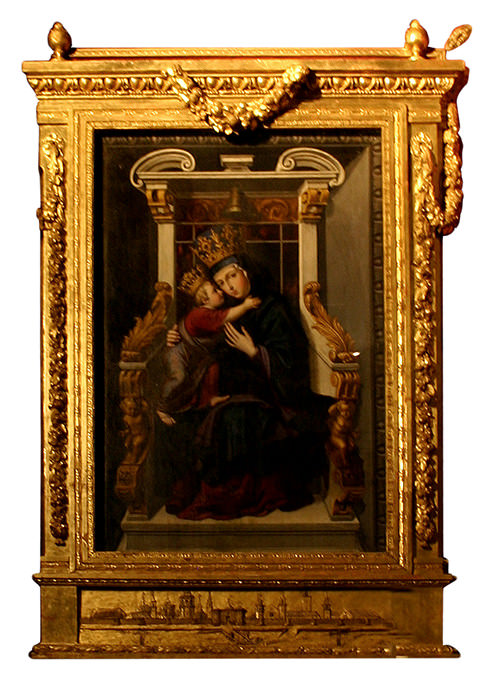
Centre of the altarpiece
Our Lady
of the Angels of El Puig Oil painting by Agustín de Ridaura,
disciple of Ribalta
(17th century)
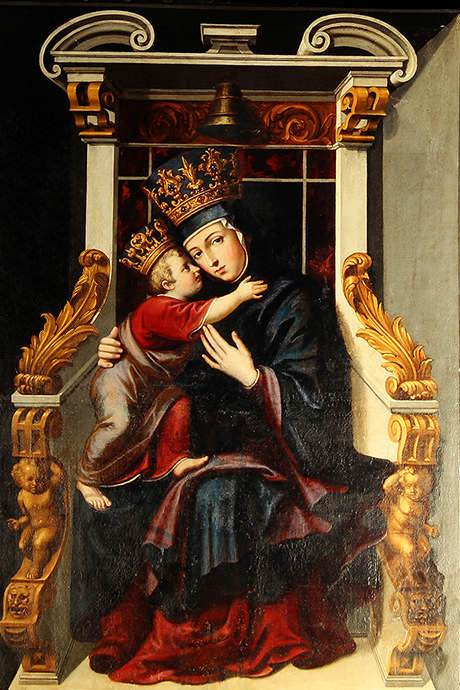
When the Christian troops settled in Puig, a small mountain in the north of Valencia, were preparing to conquer this city in 1237. A stone relief representing the Mother of God was found in that place, in Byzantine style. The discovery encouraged the troops of James I the Conqueror King of Aragon to won the Muslim troops in unequal combat in the fields of El Puig. Thenceforward, the place is called Puig de Santa María. After this battle, the Christian troops took control of Valencia. The Christian king attributed the conquest to the help of the Blessed Virgin Mary, so he named her patron saint of the conquered kingdom. And forthwith, thereat, he erected a sanctuary and entrusted it to the monks of the Order of the Blessed Virgin Mary of Mercy. Thereafter, El Puig de Santa María has been a centre of pilgrimages and the heart of the Valencian land. The statue of Saint Mary was canonically crowned on 9th October (in the anniversary of the Conquest of Valencia) in 1954. Her feast day is celebrated on 1st September.
On the base of the frame
Relief carving José Cotanda
(18th century)
Relief carving depicting a panoramic view of Valencia.
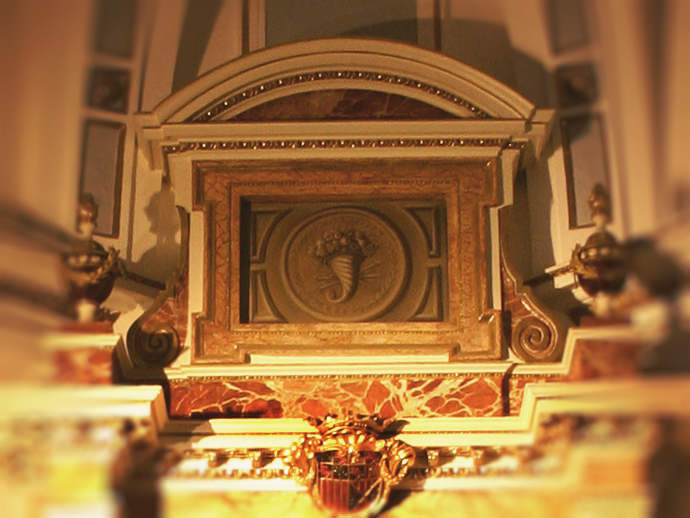
Attic of the altarpiece
Horn of Abundance Oil on canvas.
Unknown author,
(18th century)
Roman symbol of the city of Valencia.
Above the altar
Saint Francis Xavier Attributed to the sculptor Ignacio Vergara
(18th century)
Niche with the recumbent statue – in a mystic trance – of Saint Francis Xavier.
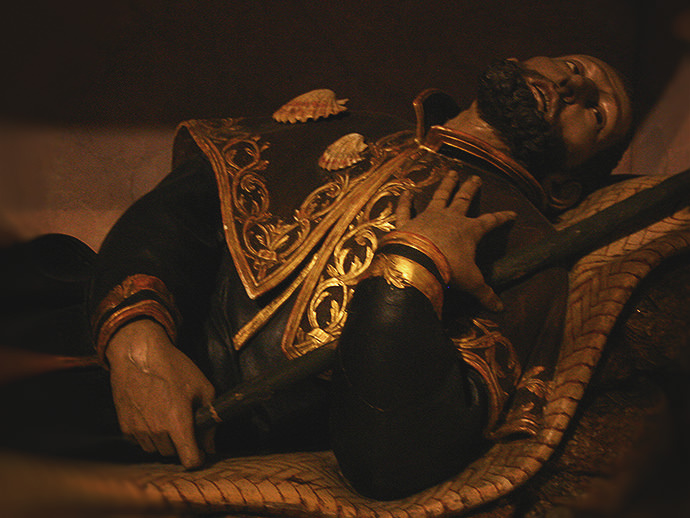
Saint Francis Xavier, Jesuit and Apostle of the Orient, was born in a Navarrese noble family. He was one of the first disciples of Saint Ignatius of Loyola. He died in Japan in 1552 and his body is kept in the Indian city of Goa. His feast day is celebrated on 3rd December. This type of recumbent statue, like the one of Saint Mary Magdalene in the contiguous chapel of Raphael, is characteristic of the Italian Baroque style and symbolises the religious ecstasy or mystic trance of the Saint, depicted as pilgrim of the Gospel.
In the left wall of the chapel
Sepulchral urn
Sepulchral urn, maybe of Mr. Josep Jofré, lord of Pardines. Embellished with four Madonna lilies.
On the walls
Saint Anthelm and Saint Hugh of Lincoln, Carthusian monks Oil on panel
by F. Ribalta
(17th century)