Valencià
 Español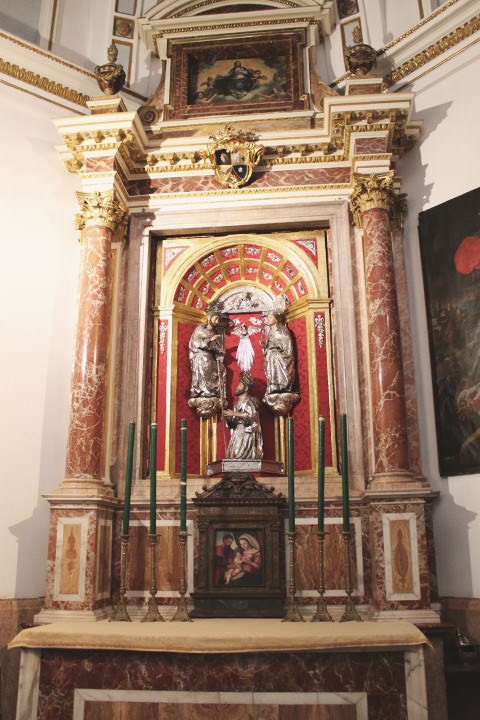
Key information
Chapel of Saint James, Apostle
Altarpiece
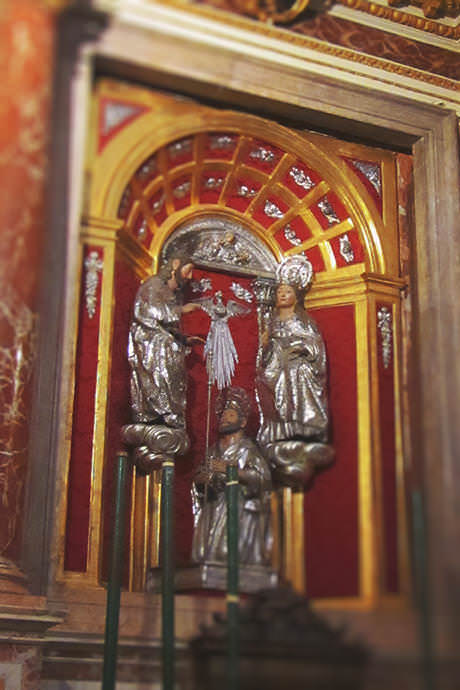
Apparition of Jesus Christ and the Virgin Mary Artwork by Bernabe Thadeo de Piero de Pone
(late 15th century)
Apparition of Jesus Christ and the Virgin Mary Mother of God to Saint James the Apostle. Embossed silver and enamelwork.
Next to the altarpiece
Saint James Oil on canvas
by Evaristo Muñoz,
(18th century)
Saint James (James the Greater) helping the Christians in the Battle of Clavijo.
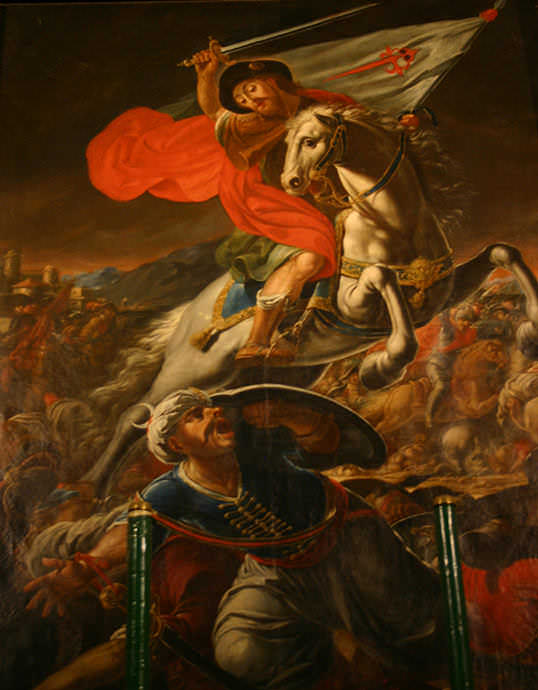
As it is detailed in the Gospels, Saint James (also called Santiago) and Saint John, fishers, sons of Zebedee, were called by Jesus in the shore of the lake of Galilee. Due to their vehemence, the Lord called them “sons of thunder”. Saint James was the first apostle to die as a martyr of Christ in Jerusalem. According to the tradition, he preached the Gospel in Spain, where he was encouraged by the apparition of the Virgin Mary in Zaragoza. After his martyrdom, their disciples brought his body to Galicia. There, his sepulchre is worshipped in the city of Santiago de Compostela. It is the end of the Way of Saint James, which covers all central Europe. His feast day is celebrated on 25th of July, and when this date falls on a Sunday, that year is considered as a Jacobean Year. During the Reconquest of Spain, the Christians – especially the Navarrese and the Galician, Leoneses and Castilians – considered Saint James as their protector. Moreover, a legend narrates the Battle of Clavijo (in La Rioja) in the year 844, where the King Ramiro I of Asturias defeated the Muslims with the aid of Saint James the Greater. The Apostle appeared riding a white horse, such as he is portrayed in the painting of this chapel. It deals with a tradition subsequent to the real battle, which took place in Albelda (La Rioja), although the historical records do not mention the apparition of Saint James.
In the attic of the altarpiece
The Assumption of the Blessed Virgin Mary Oil on table
unknown author
(17th or 18th century)
The main part of the paintings of the attics comes from altarpieces previous to the Neoclassical remodelling of the 18th century.
Sepulchral urn on the left
Sepulchre
Sepulchre of the third Bishop of Valencia, Brother Andres de Albalat O.P. (Dominican), who put the first stone of the Cathedral in this place in the year 1262. He died in Viterbo (Italy) in 1276.
Sepulchral urn on the right
Sepulchre
Sepulchre of the infant Mr Alfonso of Aragon, first-born of the king Mr James I the Conqueror and his first wife. It is covered with the Royal Arms of Aragon.
Above the altar
Small altarpiece of the Holy FamilyAnonymous,
(16th century)