Valencià
 Español
What is a Jubilee Year?
The Origin
The origin of Jubilee Years can be traced back to the Book of Leviticus (Lev 25:10–12), where the Law of Moses prescribed the celebration of a special year. This Jubilee year involved the cancellation of debts, the restoration of lost property, the return of land to its original owners, and the liberation of slaves, among other measures. It was a year of joy and freedom – an opportunity to begin anew through the mercy of the Lord, who continually accompanies and cares for His people.
During a Jubilee Year, the Church grants a plenary indulgence to the faithful who fulfil the five required conditions: sacramental confession, Holy Communion, pilgrimage, prayer, and the performance of a charitable act.
The word Jubilee comes from the horn with which the beginning of this special year was proclaimed: a ram’s horn, yobel in Hebrew.
In the New Testament, Jesus appears as the One in whom the Jubilee of Israel is fulfilled in its entirety. Christ Himself is the mercy, forgiveness, and love foreshadowed by the ancient Jubilee. For this reason, in Him the “year of grace” is completed, as we read in the Gospel of Luke (Lk 4:16–21), in the passage set in the synagogue of Nazareth where Christ proclaims the fulfilment of Isaiah’s prophecy (Is 61:1–2).
Year of Grace
The Church proclaims a Jubilee Year as a true year of grace: a year of forgiveness of sins and of their temporal consequences, a year of reconciliation between those at odds, a year of many conversions, of sacramental and extra-sacramental penance.
Holy Year
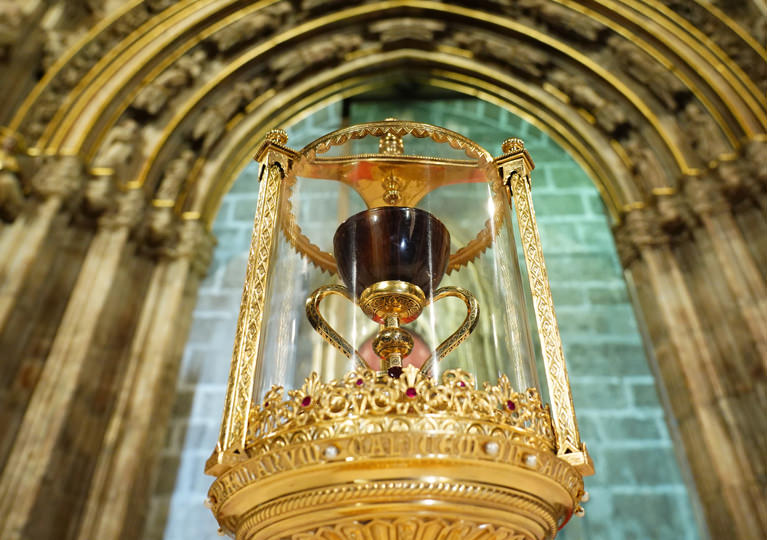
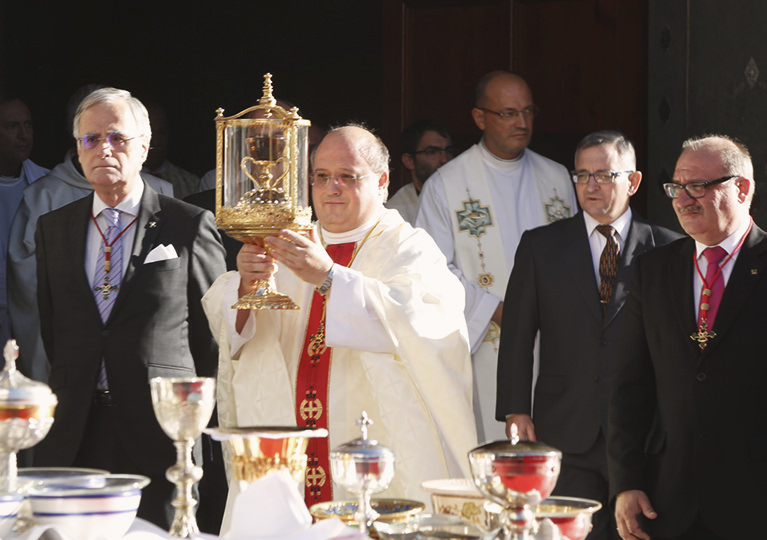
Alongside ordinary Jubilees, the Church may also proclaim extraordinary Jubilees in particular places, linked to significant celebrations, locations or sacred objects. The Jubilee is commonly called a «Holy Year», not only because it begins and unfolds with sacred rites, but also because its aim is to foster holiness of life among the whole People of God.
Celebrating the Jubilee involves three key actions
- 1. A deep examination of conscience concerning the life of the baptised person and the community.
- 2. Sincere repentance and a firm intention to change one’s heart (conversion)
- 3. Walking towards the merciful love of the Father.
Another particular grace of the Holy Year is the gift of the plenary indulgence: the remission before God of the temporal punishment due for sins whose guilt has already been forgiven. The Jubilee is, therefore, a year of grace aimed at interior renewal.
What is a plenary indulgence?
When, having committed a sin, we repent and seek God’s forgiveness in the Sacrament of Reconciliation, God pardons the guilt of that sin. Nevertheless, a responsibility remains for the consequences the sin may have caused to oneself, to others, or even to society.
Sin leaves behind effects – known as “temporal punishment” – which persist like a debt, and which can be lessened through prayer, works of mercy, and the acceptance and offering of suffering.
The Church understands that, just as sin creates a “punishment”, acts of holiness generate a store of grace, entrusted to its care. In the Holy Year, the Church opens this treasury and invites the faithful to share spiritually in these goods, allowing the holiness of the saints to compensate for the temporal effects of sin.
A plenary indulgence is obtained by fulfilling four conditions:
- 1. Sacramental confession and repentance
- 2. Participation in Mass and Holy Communion
- 3. Pilgrimage to the Jubilee church
- 4. Prayer for the intentions of the Supreme Pontiff
How to arrange a visit
To contact the Cathedral and arrange a visit, please write to: jubileosantocaliz@catedraldevalencia.es
In the email
- Please state who you are and how many people are in your group, together with the name and contact details of the person or priest responsible.
- Indicate whether you wish to visit the visitor reception centre*.
- Indicate your arrival time and whether you wish to celebrate the Eucharist at the cathedral**.
* See https://www.visitvalencia.com/en/santogrial/visitors-centre.
** Indicate whether you will be accompanied by a priest.