Valencià
 Español
About the Holy Chalice
The Holy Chalice of the Lord’s Supper
Archaeological facts, testimonies of the tradition and documents support the theory that this beautiful cup was in the Lord’s hands…
… on the eve of his Passion, took bread with his holy and venerable hands and looking up the sky, to You, God, Almighty Father, giving thanks, blessed you, broke the bread and gave it to his disciples saying:
“Take this, all of you, and eat it, this is my Body which will be given up for you”
When supper was ended, he took this glorious chalice into his holy and venerable hands, giving thanks, blessed you and gave it to his disciples saying:
“Take this, all of you, and drink from it: this is the cup of my Blood, the Blood of the new and everlasting covenant. It will be shed for you and for all so that sins may be forgiven. Do this in memory of me”
Eucharistic prayer I, Roman Canon.
Cf. Matthew 26-29; Mark 14, 22-25, Luke 22, 1520 and I Corinthian 11, 23-25.
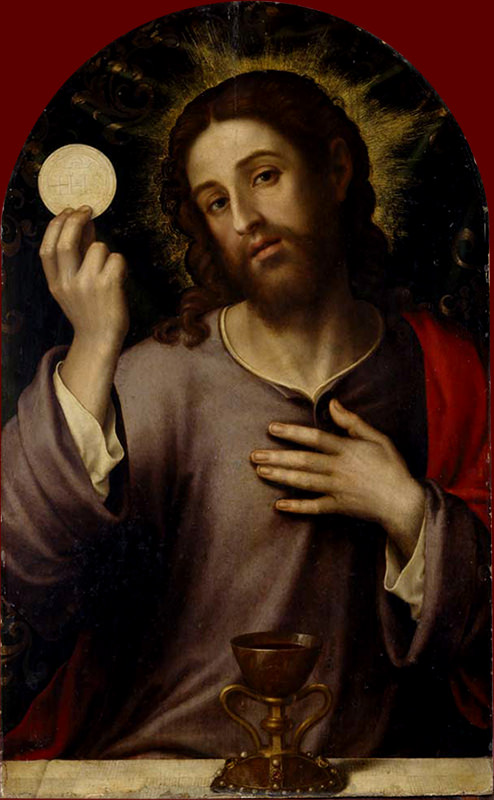
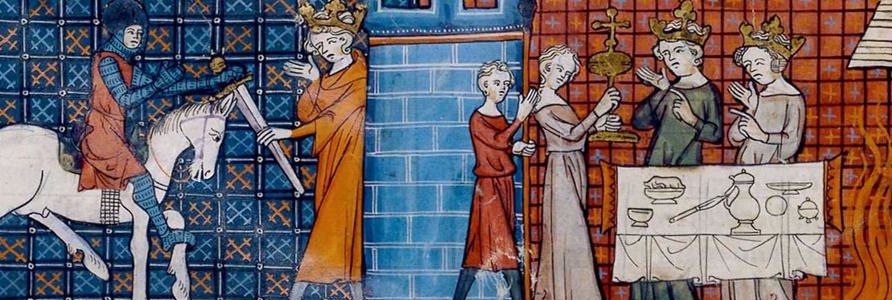
Eucharistic Christ. Juan de Juanes (16th century)

Holy Chalice in 3D
Discover every detail of the Holy Chalice from every angle.
Click and drag to rotate it in any direction.
Use the mouse wheel to zoom in or out.
Enlarge the Holy Chalice in 3D
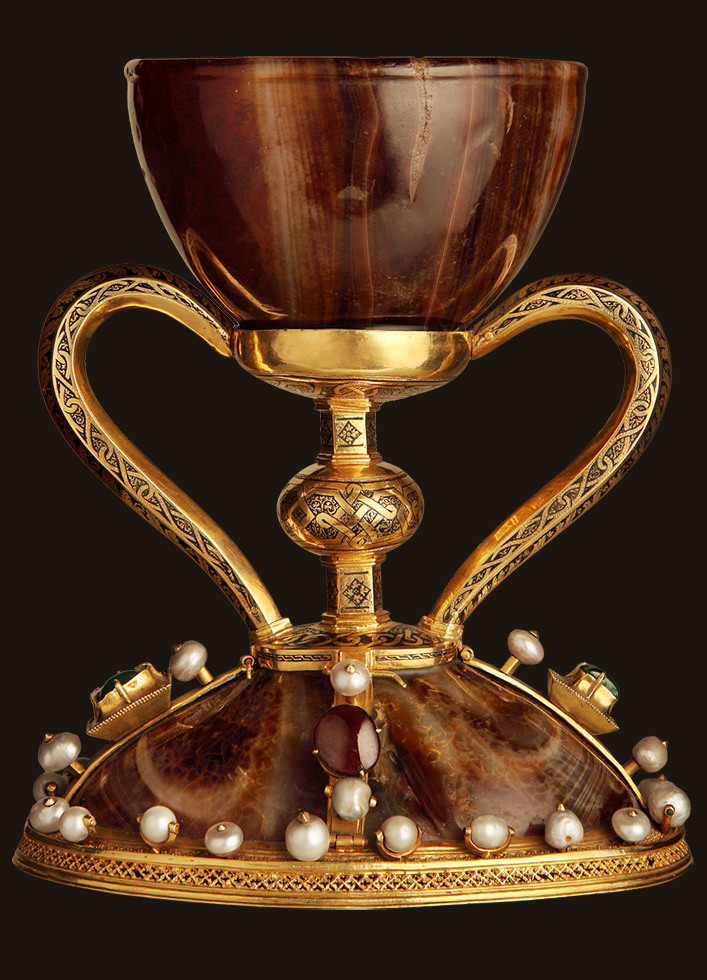
The first impression
The Holy Chalice of Valencia arouses feelings of admiration and scepticism at the same time.
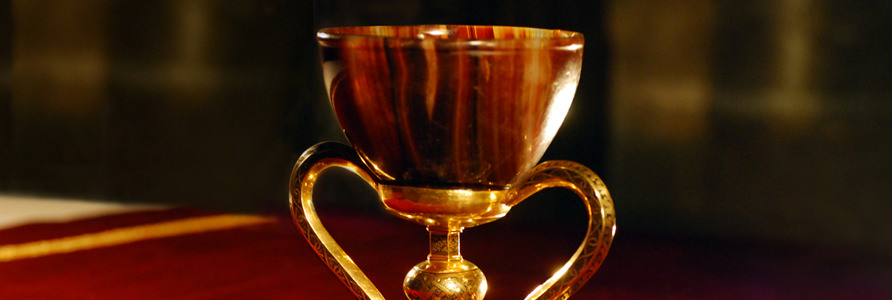
The visitor feels captivated by the beauty of the Grail, its perfect and exceptional shape, the details in gold, the pearls and the precious stones. The observer comes with the mind full of legends, films, even warned by novels and pseudo-scientific literature of “Grail-like” themes.
But also with scepticism
- How can that medieval-looking chalice be the cup of the Last Supper
- Why is it in Valencia?
- Or is it maybe one of the many supposed Grails?
- Why isn’t it so famous like the Shroud of Turin or the Tunic of Treveris?
And many more questions we hear every day in the Cathedral…
The appearance should not mislead us.
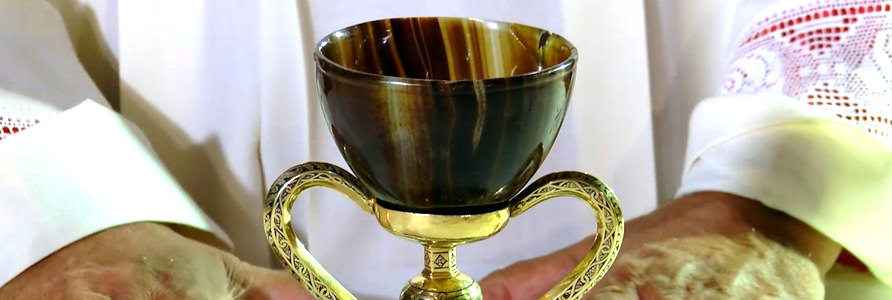
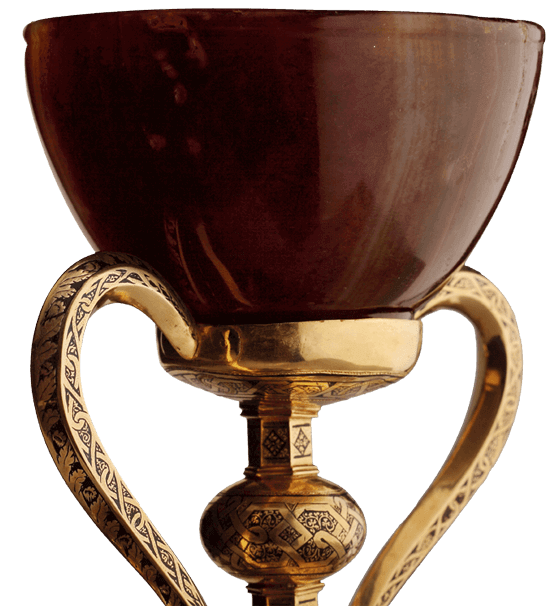
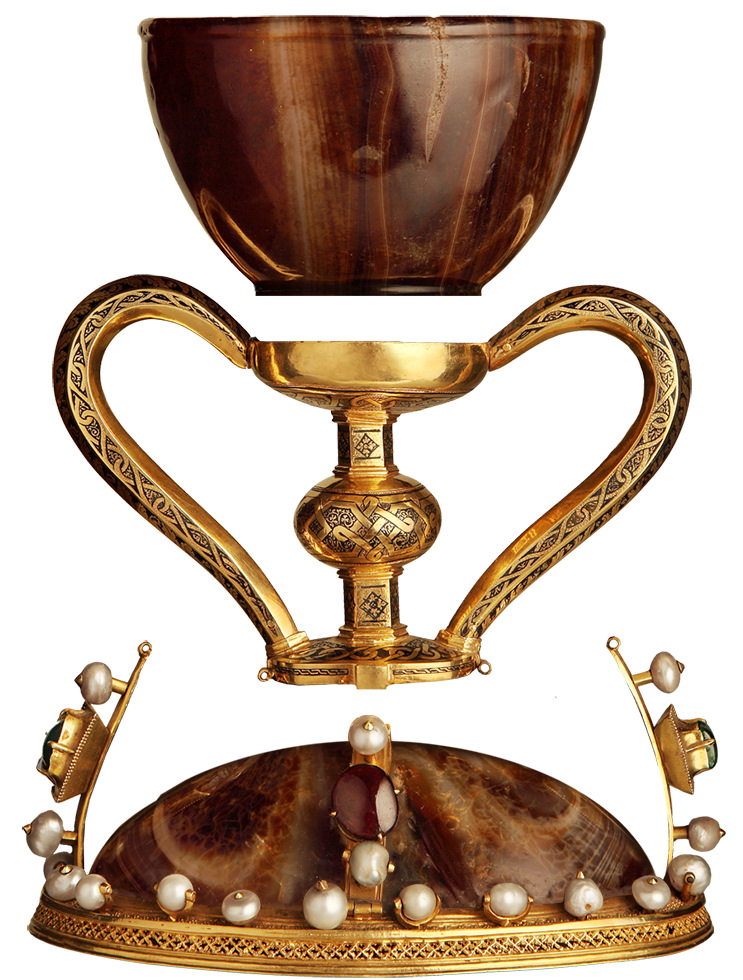
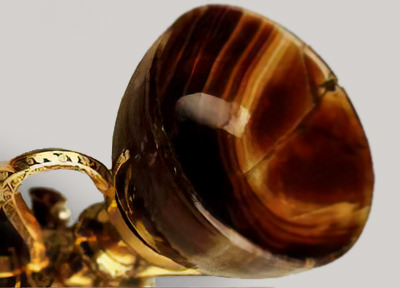
Actually, the relic is the upper cup.
Agate cup
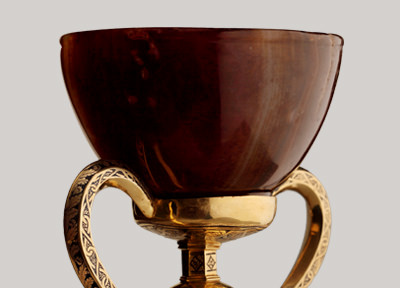
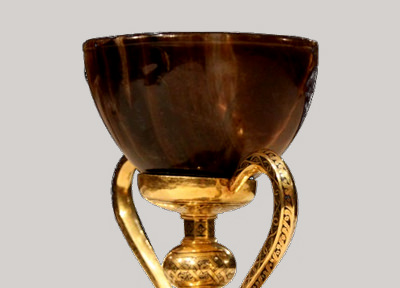
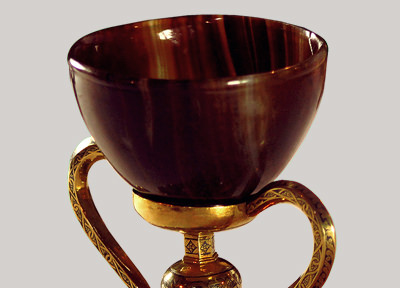
The cup is made of finely polished agate stone that shows warm colours streaking when refracting light; it is a beautiful “Alexandrian vessel” that archaeologists consider to be of oriental origin and carved probably in the 2nd – 1st centuries BC 1.
Handles, base and the inverted cup
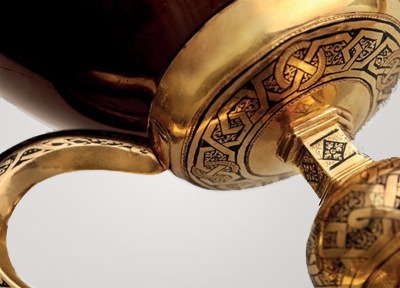
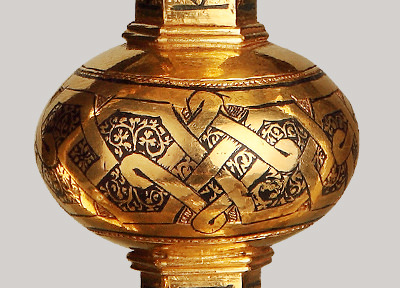
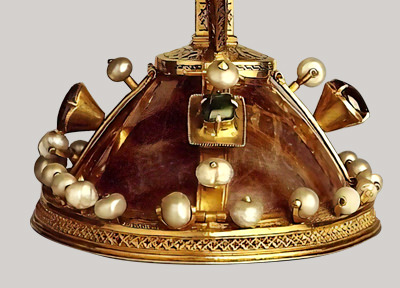
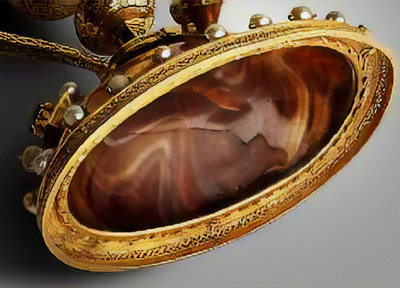
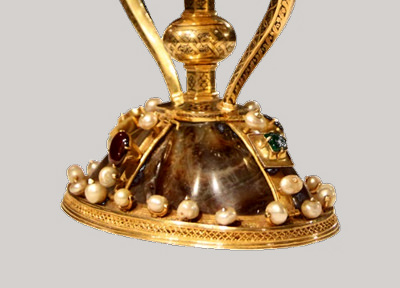
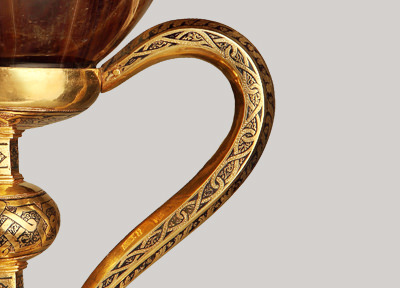
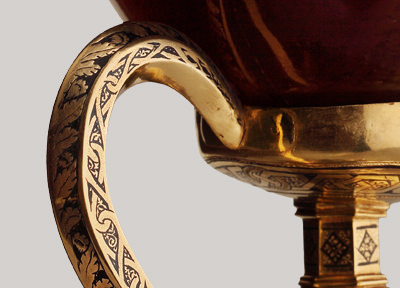
Much later are the handles and the finely engraved golden foot, which encloses an agate cup or “naveta” of Islamic art, different from the upper cup; all this, as well as the jewels that adorn the base are from medieval times.
1. This is the conclusion of the study carried out by Professor Mr. Antonio Beltrán and published in 1960 (“The Holy Chalice of the Cathedral of Valencia”), never refuted, and which is at the base of the growing respect and knowledge of the Holy Chalice.
Measurements of the Chalice
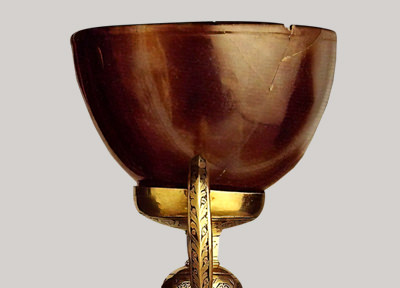
The dimensions are moderate: 17 cm. high, the cup width measures 9.5 cm. and the elliptical base measures 14.5 x 9.7 cm.
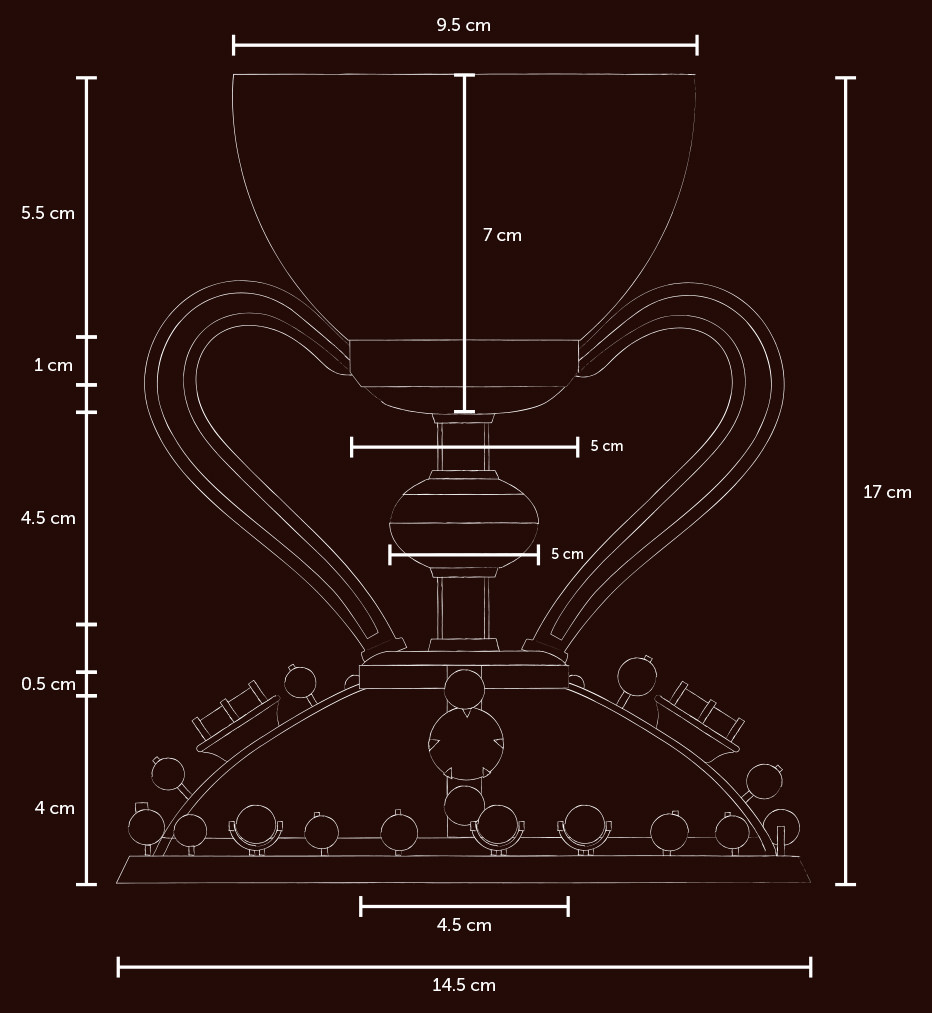
Venice and other places keep chalices with semi precious stones of Byzantine origin. In Spain, there are similar vessels of the 11th and 12th century, but they are liturgical cups, wrapped in gold and silver with an interior side in metal.
However, when composing the Valencia chalice, the goldsmiths highlighted the cup, bare of ornaments, with large handles to carry it without touching the precious and delicate chalice of translucent stone.
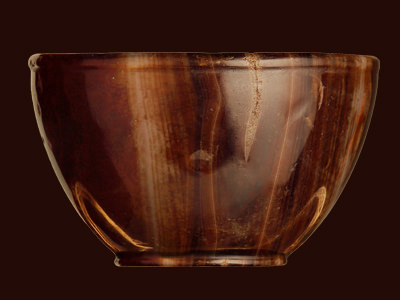
Agate or carnelian blessing cup. Between the 2nd and 1st centuries BC.
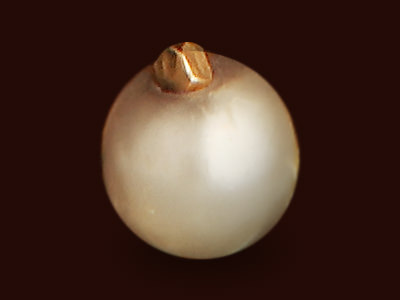
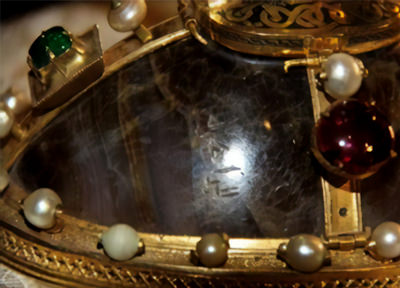
The base contains 28 small pearls, two almandine garnets and two emeralds.
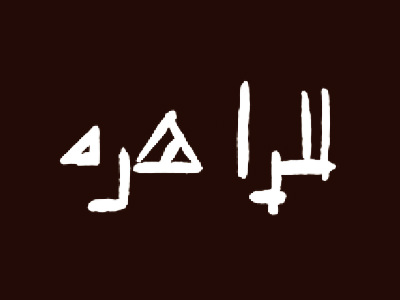
Arabic inscription in Kufic characters. They are transcribed as li-izahirati or lilzáhira, for the one who shines.
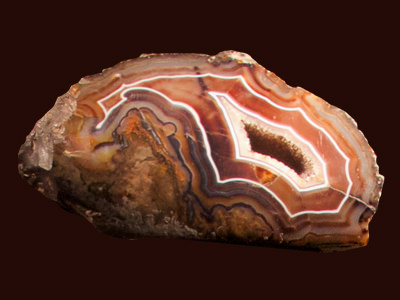
Agate stone.
Museum of Natural Sciences.
New York.