Valencià
 Español
The Bell
Tower
The Miguelete and the BellsIn 1381, Andreu Juliá began the construction of this emblematic monument of the city of Valencia. During many centuries it was called “Campanar Nou” (New Bell Tower) or “Cathedral Bell Tower”, to differentiate it from “Campanar Vell” (Old Bell Tower), a Romanesque square tower located on Barchilla Street, and of which few wall remains can be visited in the Cathedral Museum.
After Juliá, the following architects were, Josep Franch and Pere Balaguer.
Little by little its name was transformed into “Torre del Micalet” (The Micalet Tower), due to the great bell of the hours, which has served to name, by metonymy, the whole. Originally it was a free-standing tower that was joined to the Cathedral at the end of the 15th century when the central nave was extended.
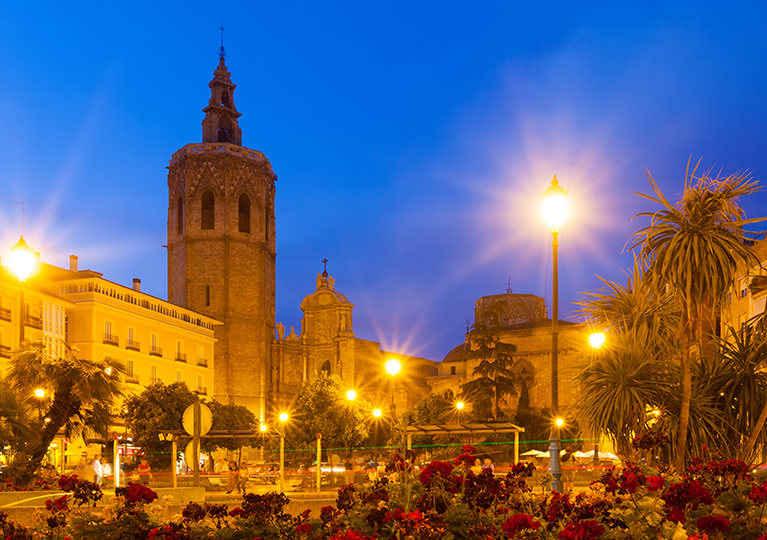
The bell tower.
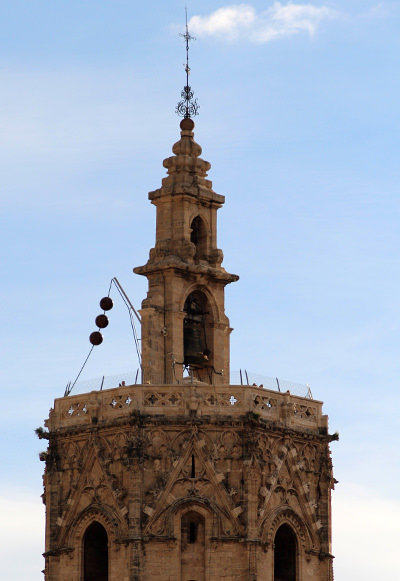
Last body of the tower.
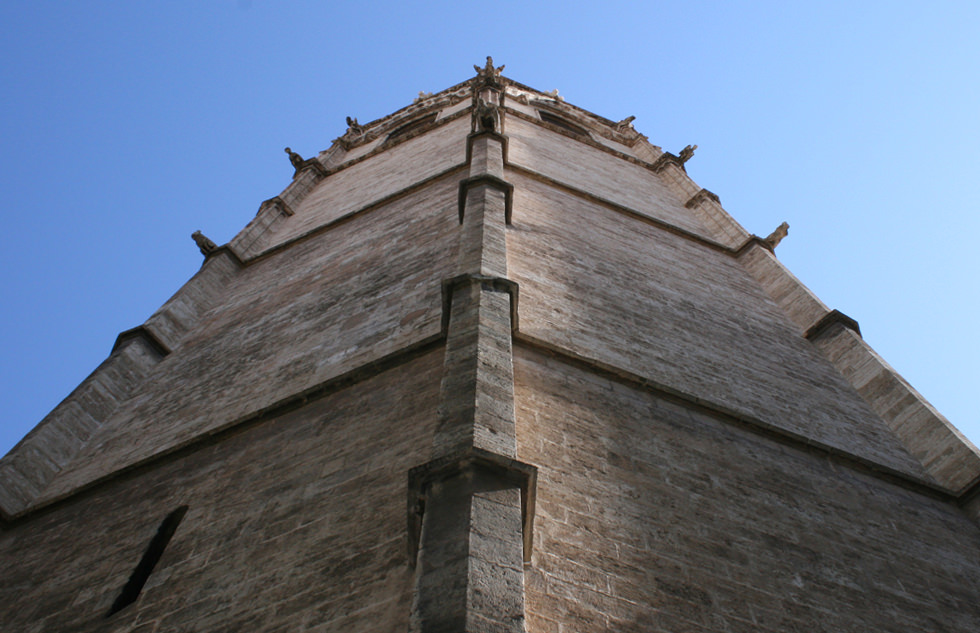
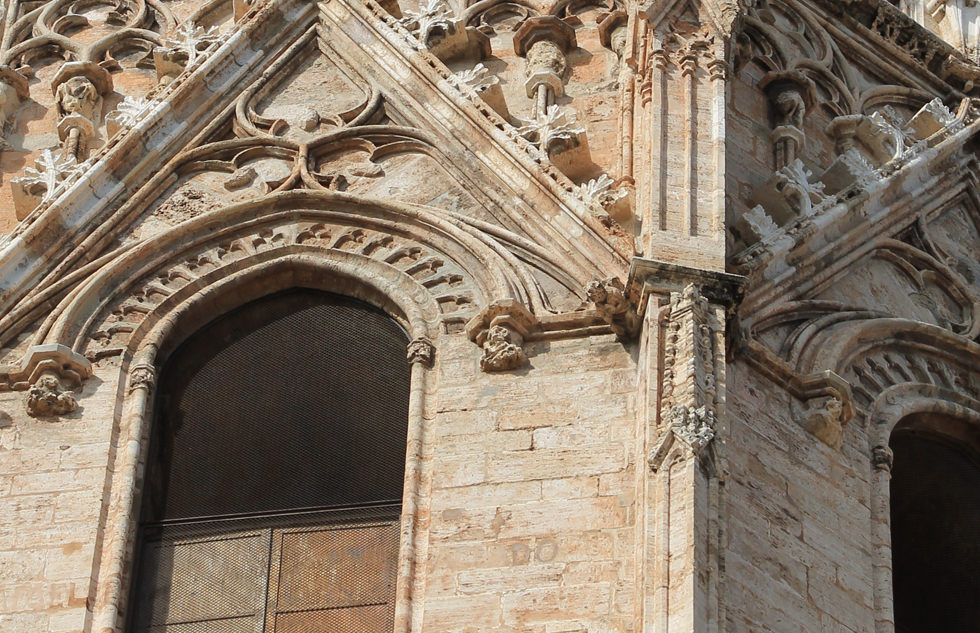
It has access through an angular door adorned with archivolts and its perimeter being equal to its height, of Catalan architectural tradition, soberly decorated on the outside by the prismatic buttresses of the edges and the fine mouldings that mark the different levels of the floors.
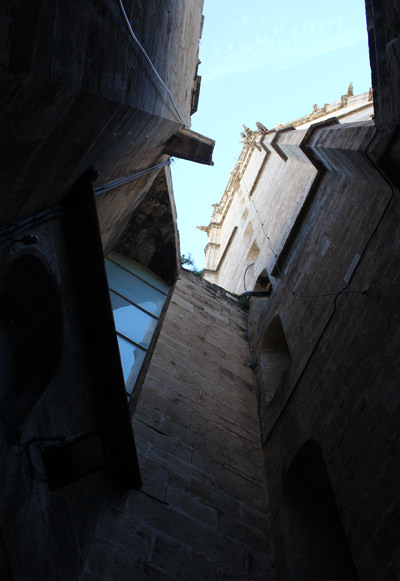
The Miguelete seen
from its entrance.
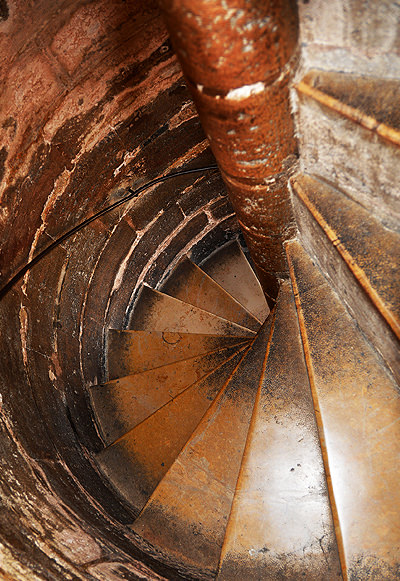
Spiral staircase
of the Miguelete.
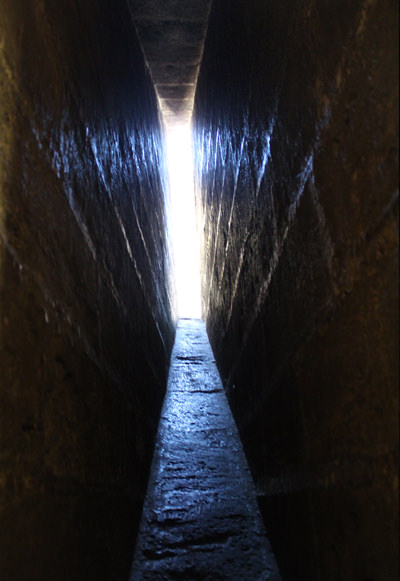
Miguelete stair
window.
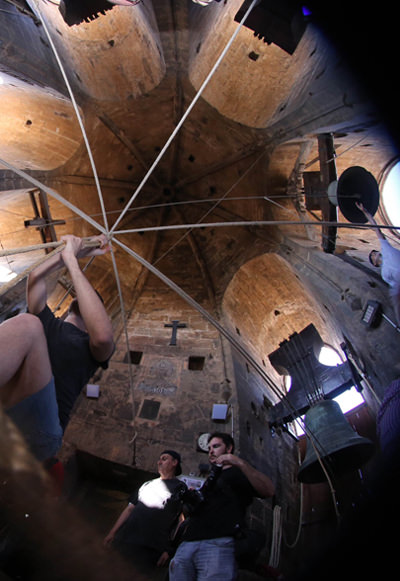
Bell room open by eight windows.
The first body is solid, leaving only the helical stairwell; the second body has a vaulted enclosure, which is the old “Presó” or Cathedral Refuge with a single exterior window; the third body is the “Casa del Campaner” (House of the bell-ringer), another vaulted enclosure similar to the previous one although larger and with two large windows.
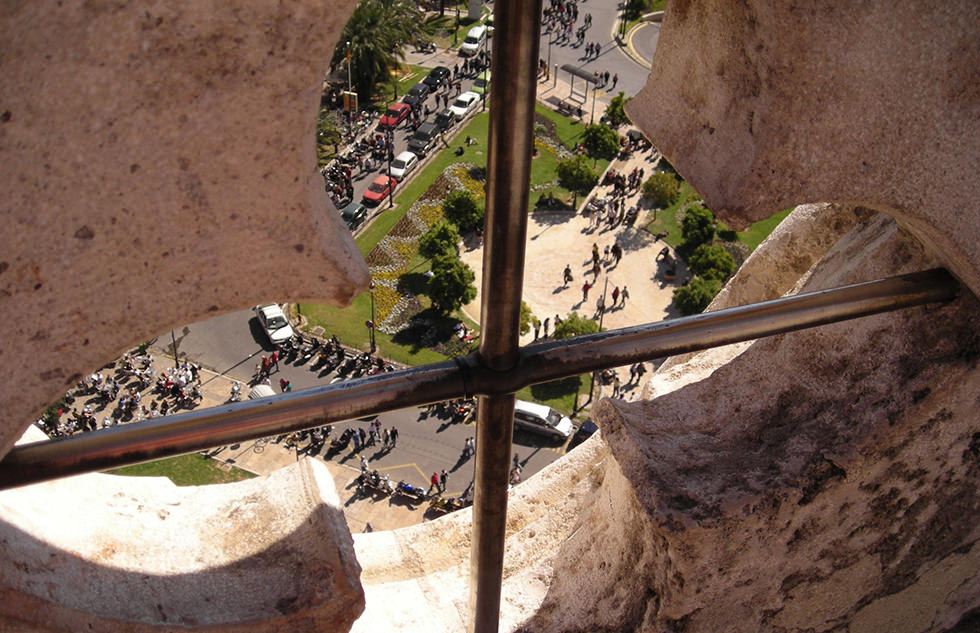
The upper floor is the bell room open by eight windows, seven of them occupied by the bells. The eighth storey corresponds to the spiral staircase, which becomes narrower from here.
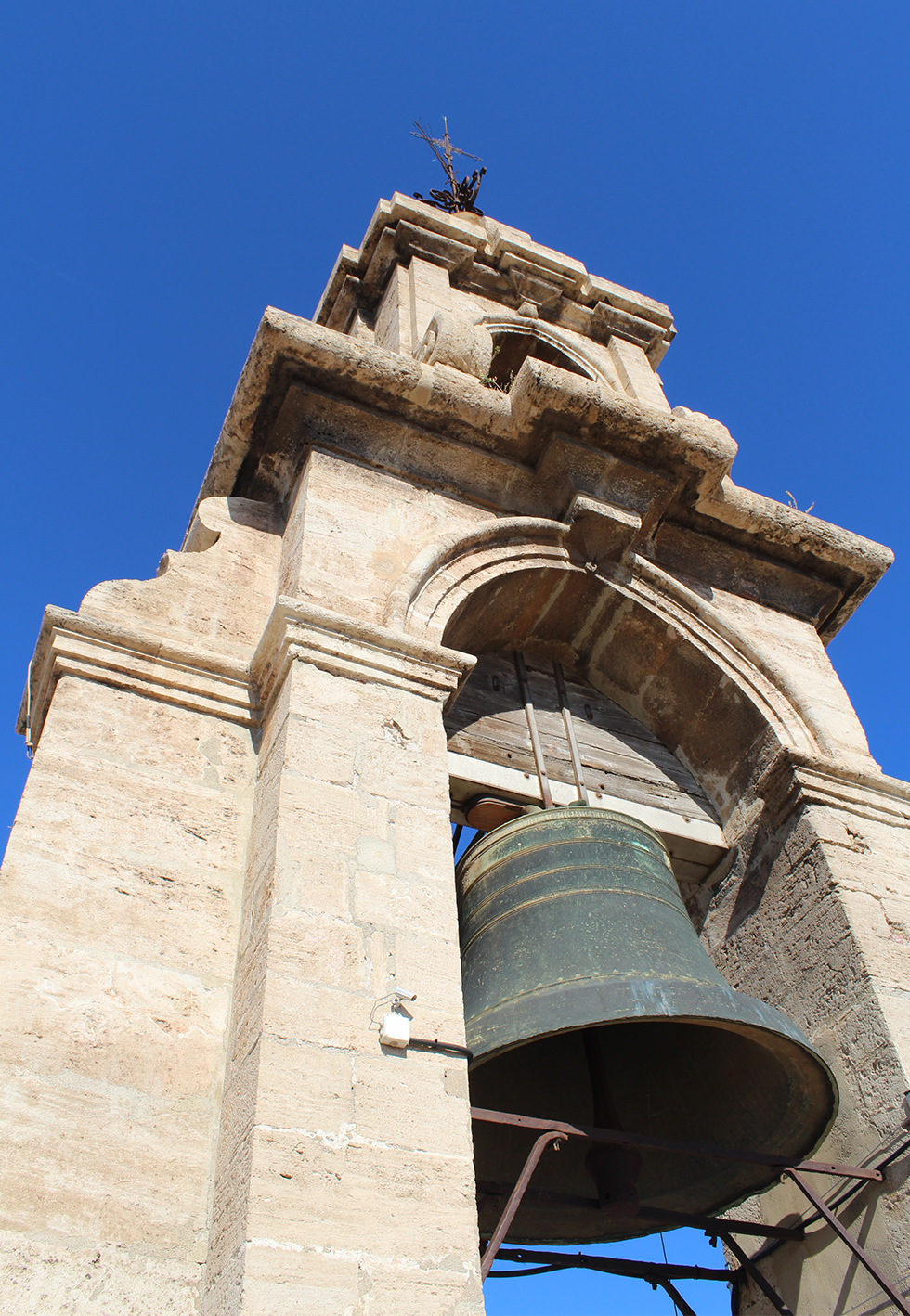
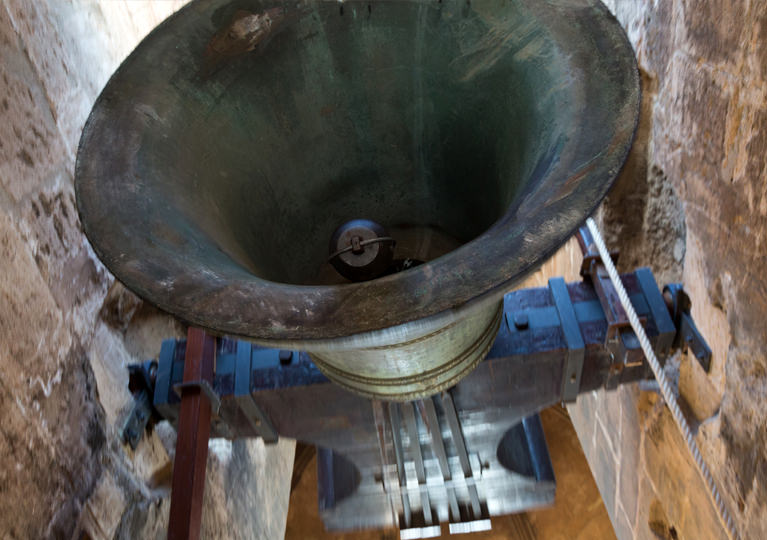
Bell wall with the Micalet bell.
In 1425, the tower was already finished up to the terrace, leaving Antoni Dalmau’s, needle project unfinished, kept in the City Historical Museum.
The bell of the hours hung from a wooden structure, located on stone pillars, similar to the one existing in many other bell towers of the Crown of Aragon.
The current steeple is an attachment built between 1660 and 1736.
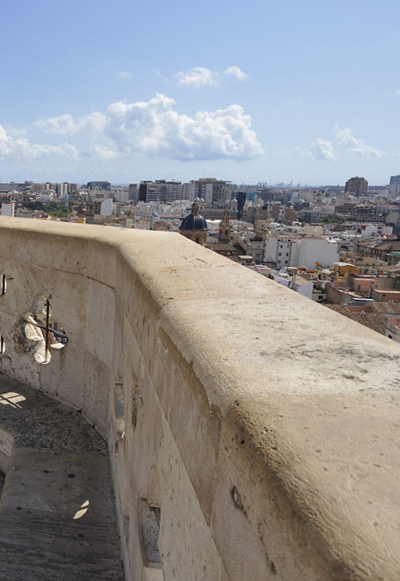
Stone railing built in 1983.
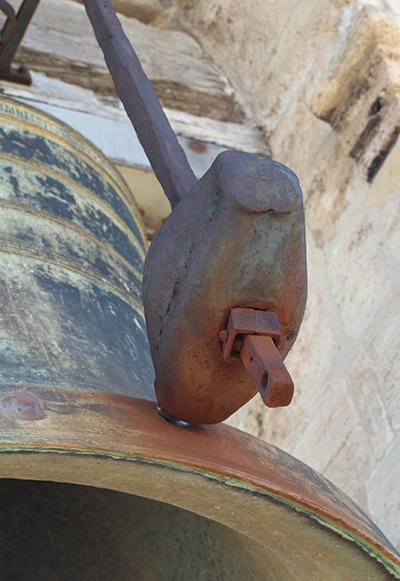
Detail of the bell “Miguelete”.
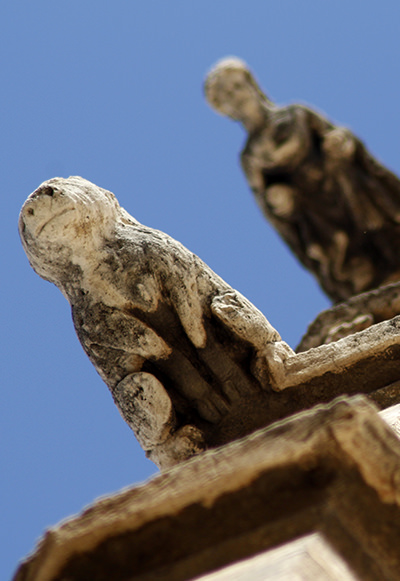
Gargoyles on the Miguelete tower.