Valencià
 Español
The unveiled
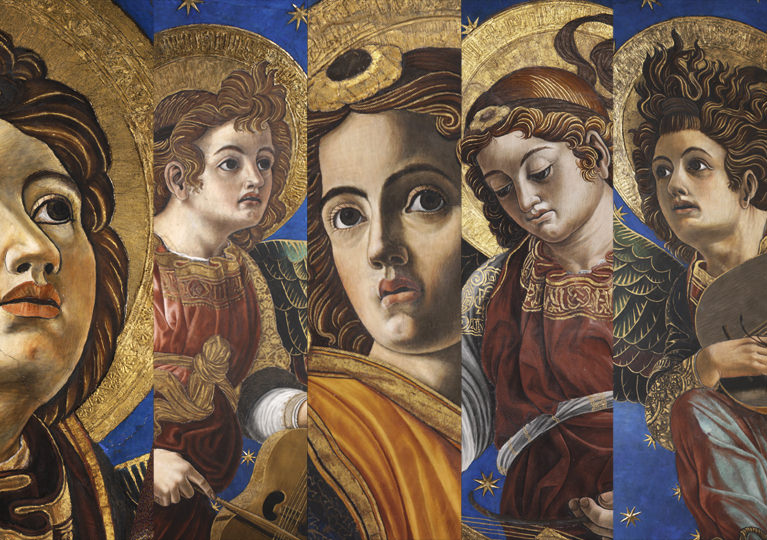
Angels
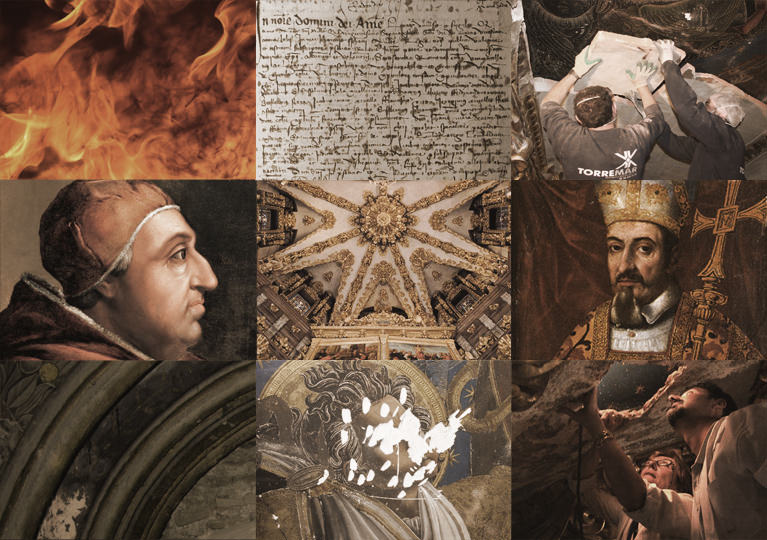
History of the Cathedral frescoesOn May 21, 1469, a flare fired by a pigeon, which represented the Holy Spirit descending from the top of the lantern tower, ignited the cloths that framed the precious wood and silver altarpiece, losing all the decoration of the apse and the wall paintings in its vault.
When its Bishop, the Valencian Mr. Rodrigo de Borja, future Pope Alexander VI, came to Valencia wishing that his cathedral would shine with the splendor of the new art that was being reborn in Italy, he brought with him two painters.
These were Francesco Pagano, a native of Naples, and Paolo de San Leocadio, a native of Reggio in Lombardy, and as soon as they arrived they signed the contract with the Cardinal and the Chapter on July 26, 1472.
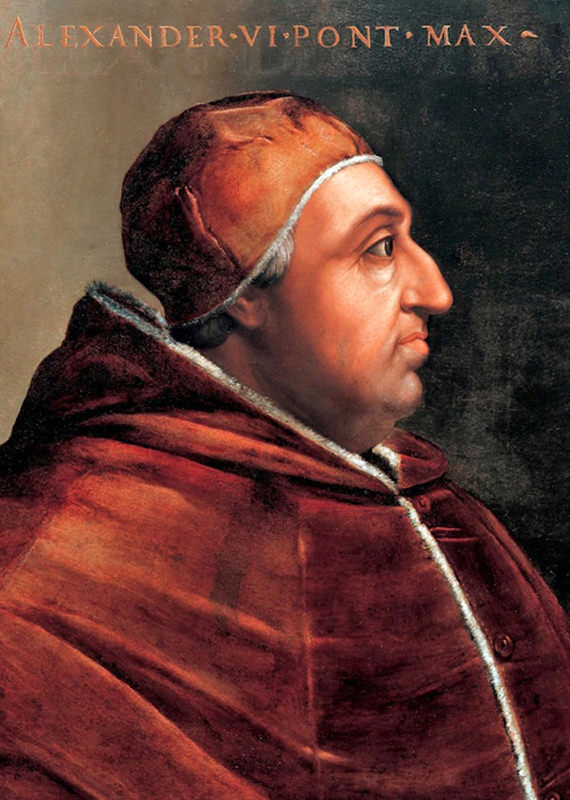
Pope Alexander VI
c. 1447–50
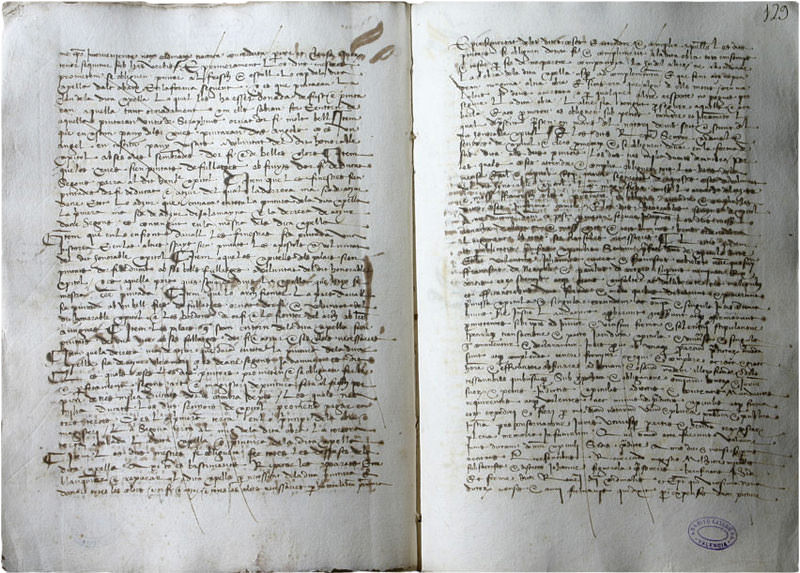
Detail of the contract, preserved in the archive of the cathedral.
In the contract, preserved in the cathedral archive, among other things, the artists undertake to paint in fresco on each of the panel of the gothic vault of the presbytery.
“… two angels, that is, an angel in each panel, dressed accordingly to the honourable Chapter, with their wings with fine gold and beautiful colours; that the ribs be painted with foliage with fruits, of fine duchy gold, as considered by the honourable Chapter; let the windows be painted with fine duchy gold and azure…”
The time to finish the work was six years.
The Angel Musicians
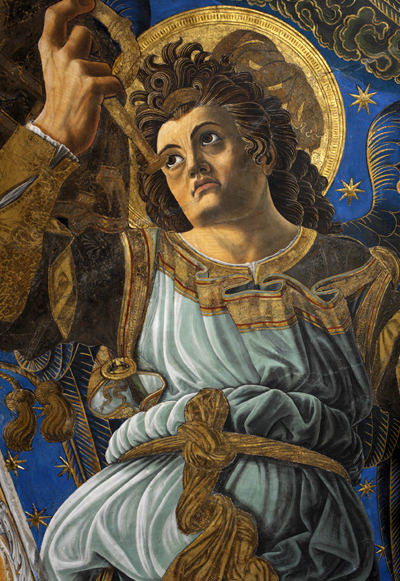
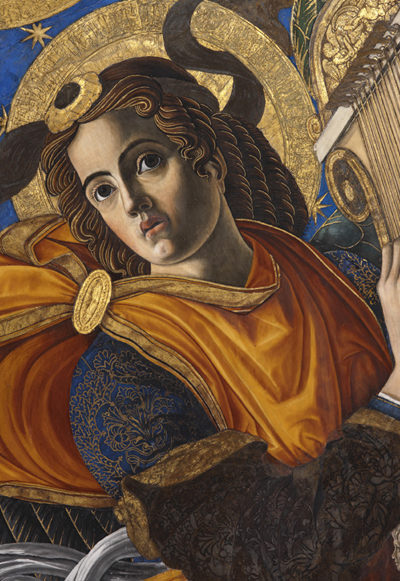
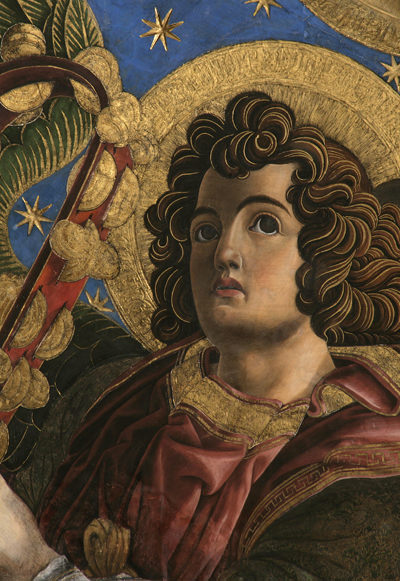
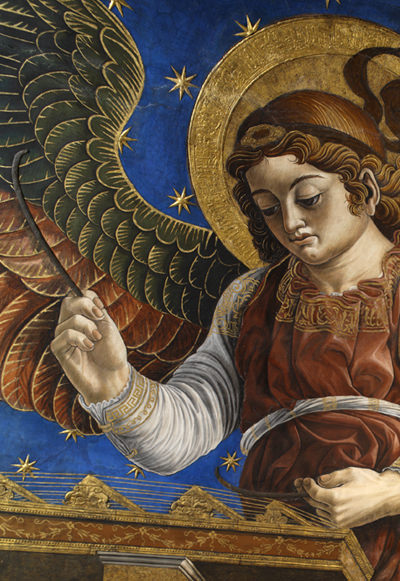
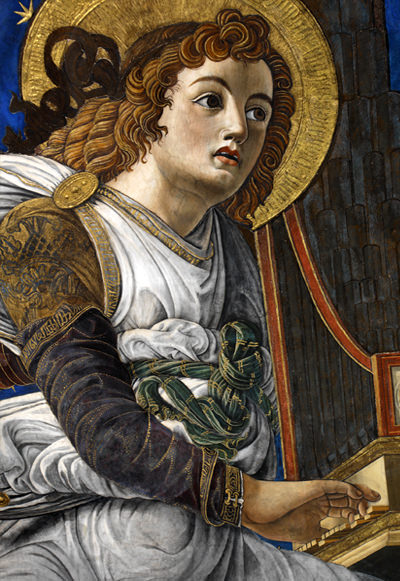
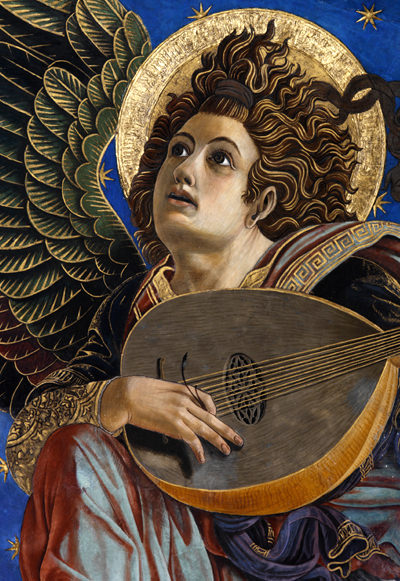
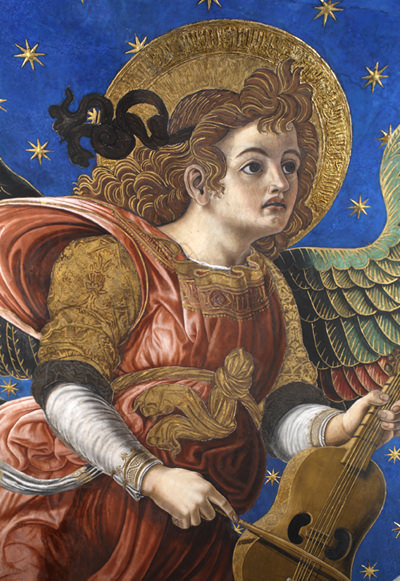
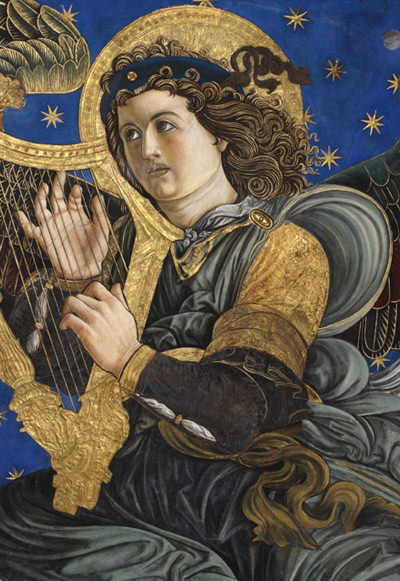
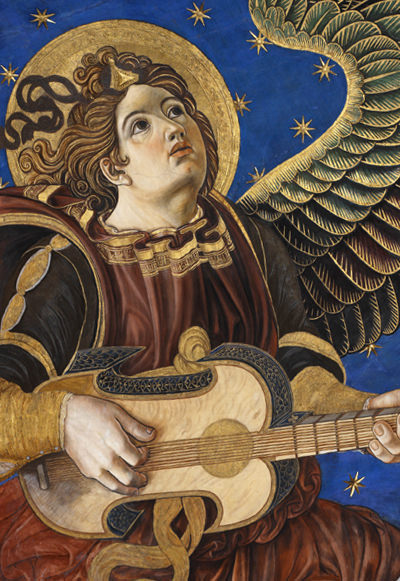
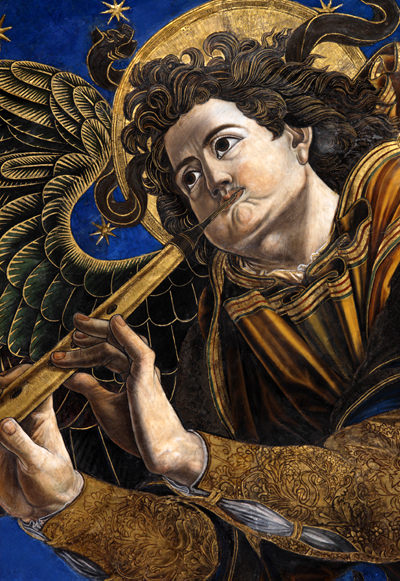
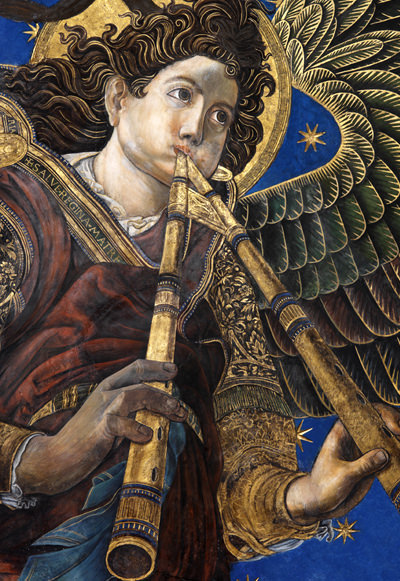
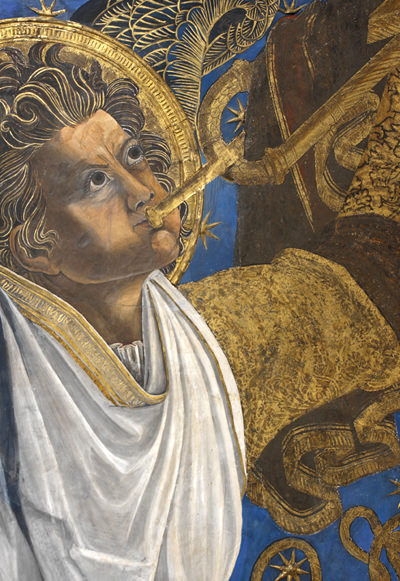
This work, which must have been one of the wonders of the first Renaissance, was covered in the 17th century, when in 1674 the Archbishop Mr. Luis Alonso de los Cameros, wishing that the silver altarpiece that adorned the altar would shine more, considered restoring the entire chapel, and for that purpose he communicated his idea to the Chapter, which approved it willingly.
Juan Pérez Castiel, a famous architect, was in charge of the work.
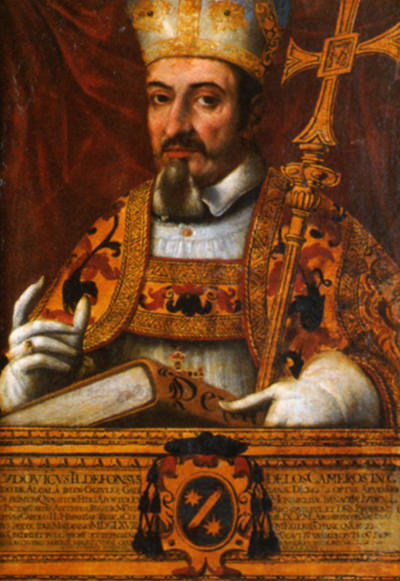
Archbishop Mr. Luis Alonso
de los Cameros.
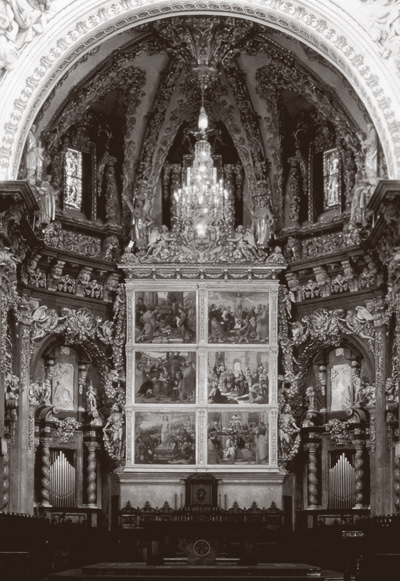
The main altar
and the baroque dome.
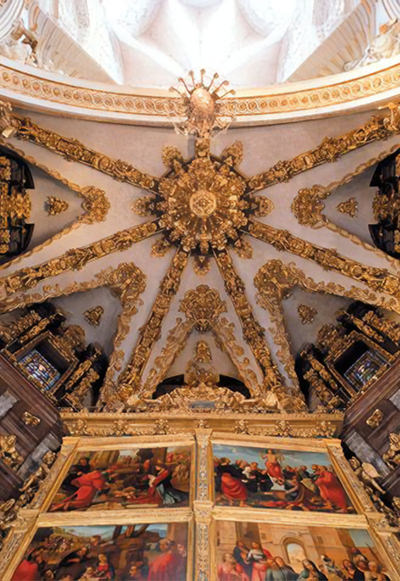
Detail of the
baroque dome.
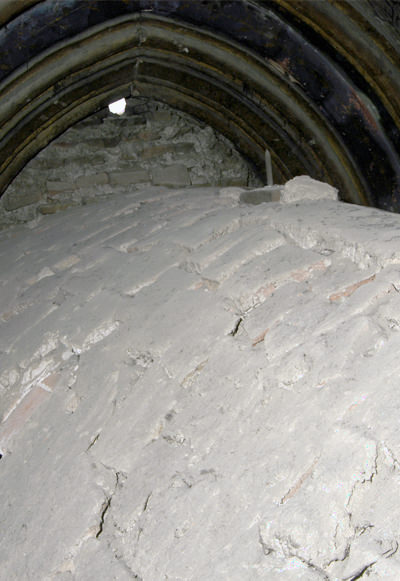
The new dome
80 cm below.
The new work, carried out in the Baroque style, lasted seven years, eleven months and ten days, and was concluded on May 28, 1682. The placement of the baroque marbles and ornaments made the paintings in the apse disappear, but the angels of the vault were hidden by a new cupola that started about 80 centimeters below the previous one from the 13th century.
On October 9, 2003, the President of the Region of Valencia, Mr. Francisco Camps, expressed his wish to restore the Main Chapel, which had not been touched in the preparation of “La Luz de las imágenes” (The Light of the Images).
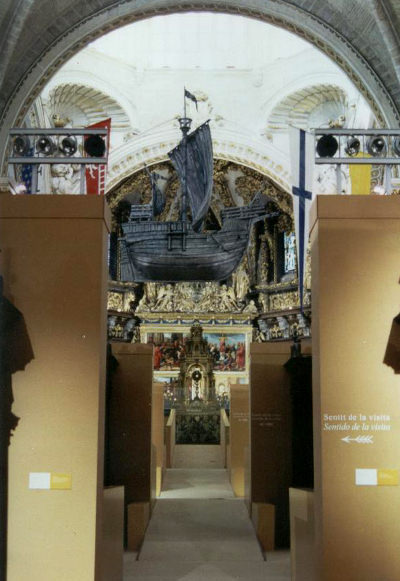
Exhibition “The light of images”.
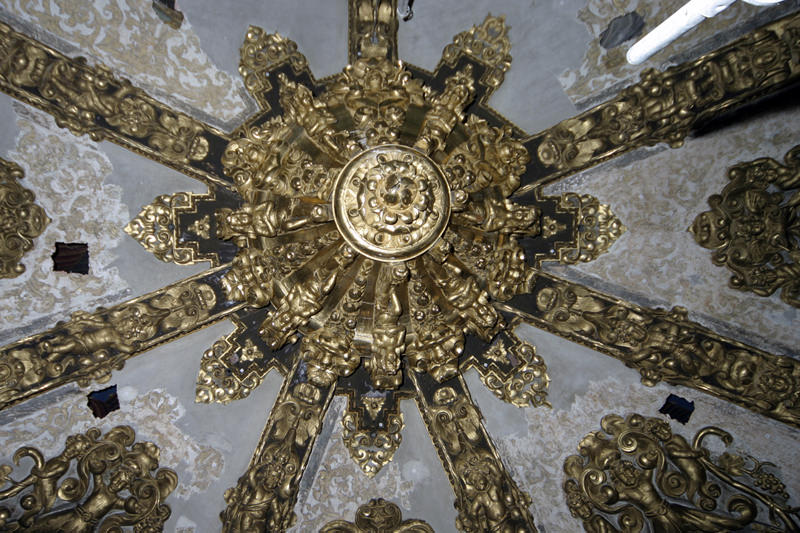
Detail of the key of the baroque dome.
After the presentation by the Chapter of an action plan and a request for it, in May 2004 began the restoration work of the Baroque decoration of the apse of the cathedral, entrusting the management of it to the Foundation “The light of the images”.
Professor Mrs. Carmen Pérez was in charge of the management.
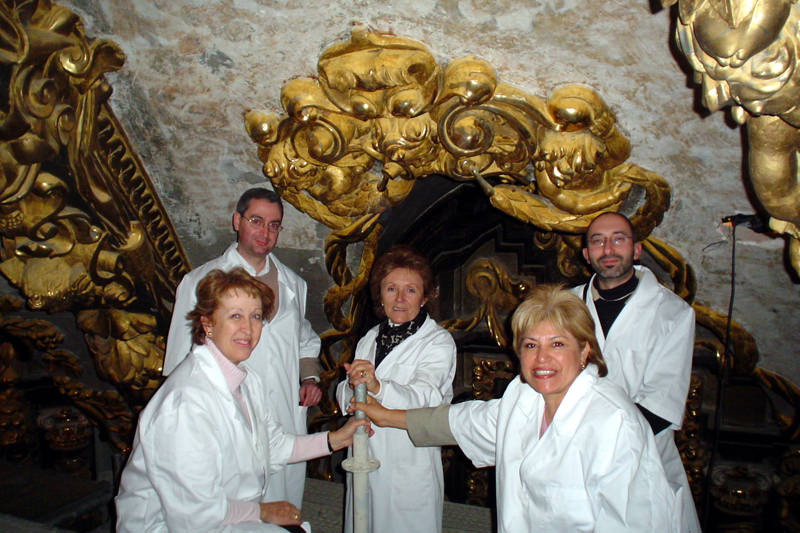
Professor Mrs. Carmen Pérez
in the centre.
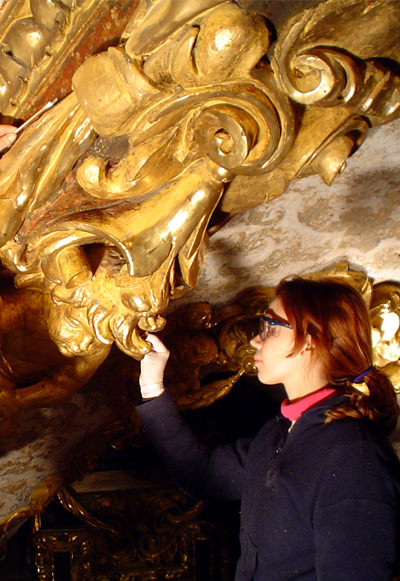
Cleaning of the
baroque panels.
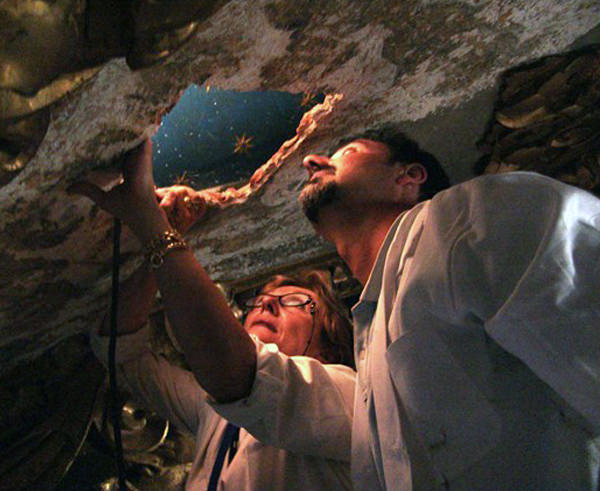
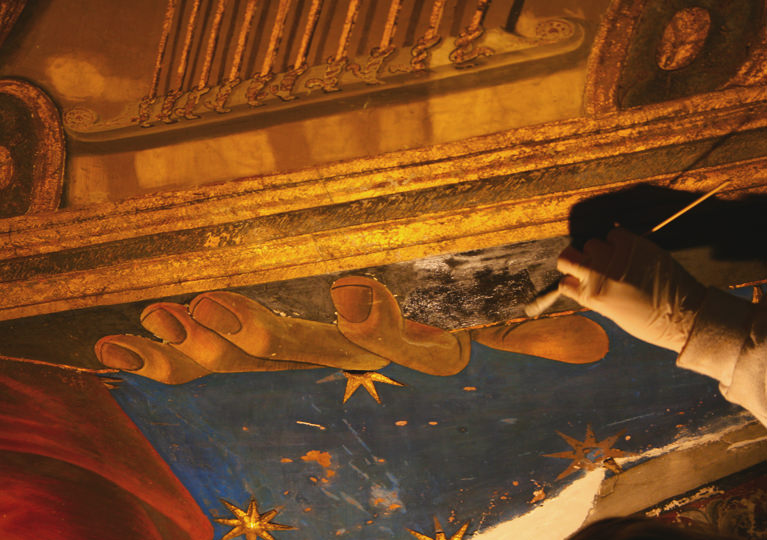
Great was the surprise when on June 22, through the hole left by the mobile piece holder, the first of the 10 great angels that surrounded the missing key could be seen with the wooden image of the Assumption of the Virgin, playing musical instruments and of a beauty that astonished as much as the good state of conservation in which they were, deciding then their discovery and restoration.
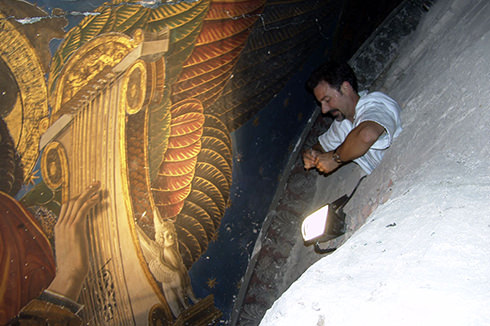
Access through the baroque dome.
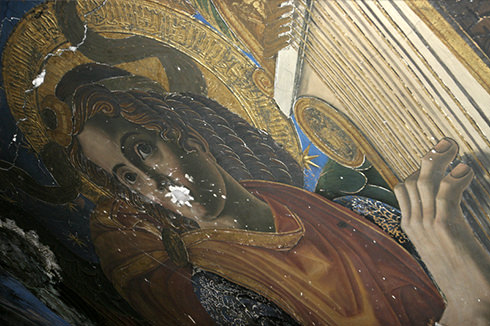
The frescoes before restoration.
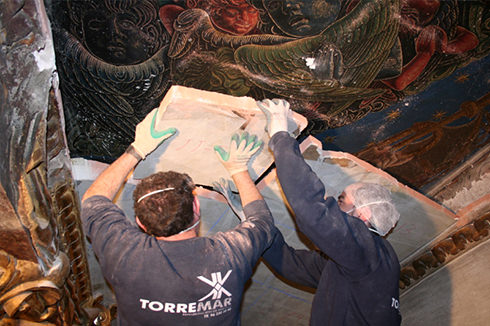
The dismantling of the baroque dome.
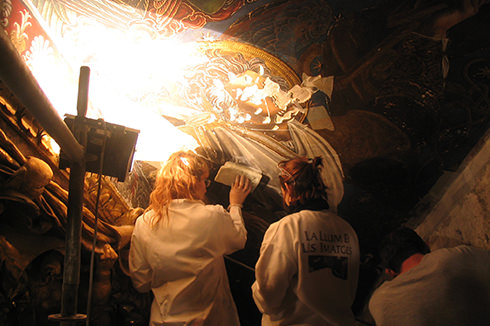
Restoration work.